Smart Warehousing: Why IoT, AI & Robotics are No Longer Optional for Indian Businesses
By Express HR Solutions on 2025-11-15 11:35:40
Picture this: It's the week before Diwali. Your online sales are through the roof (congratulations!), but your warehouse looks like a warzone. Wrong items are being packed, shipments are delayed, and your team is on the verge of burnout.
Sound familiar?
In today's India, "good enough" logistics just doesn't cut it. We’re in the age of the 10-minute delivery and the Big Billion Days sale. Customers in Mumbai expect the same delivery speed as customers in Kochi. Thanks to GST, our supply chains are now truly national, but that also means they're incredibly complex.
For decades, the answer to a logistics problem was "hire more people." But we've hit a wall. You can't just throw more manual labour at a data-driven supply chain problem.
This is where smart warehousing comes in. It’s not just a buzzword for big players like Amazon or Flipkart. It's the next logical step for any Indian business that wants to grow. But it’s not just about buying robots. It’s about building a whole new ecosystem of technology and, crucially, people.
What Exactly Is a "Smart Warehouse"?
Let's get one thing straight: a smart warehouse isn't just a big shed with a few robots whizzing around.
A smart warehouse is a fully connected ecosystem where technology and people work together. Every item, every shelf, and every process is linked, communicating in real-time to make the entire operation faster, more accurate, and more efficient.
Think of it as a trinity:
-
IoT (Internet of Things): The "Senses"
-
AI (Artificial Intelligence): The "Brain"
-
Robotics: The "Muscle"
When these three work in harmony, the old, chaotic warehouse becomes a high-performance fulfilment machine.
The Tech Trinity in Action: A Deeper Dive
Let's break down how this next-generation logistics technology actually works on the ground here in India.
1. IoT in Logistics: Giving Your Warehouse "Eyes and Ears"
The Internet of Things (IoT) is all about data. It’s a network of small, smart sensors and tags that give you real-time visibility into everything.
-
Smart Shelves & RFIDs: Forget manual stock-takes. With RFID tags on palettes and smart sensors on shelves, your inventory counts itself, 24/7. You know exactly what you have and where it is, down to the last box.
-
Environmental Sensors: This is a game-changer for India's massive food and pharmaceutical industries. IoT sensors can monitor temperature and humidity in real-time, ensuring your cold chain is never broken, preventing spoilage and saving lakhs in lost product.
-
Asset Tracking: GPS and IoT tags on forklifts, trolleys, and even employee scanners can map their movement, helping AI find bottlenecks and optimise the physical layout of your warehouse.
The result: You move from guessing what's in stock to knowing. Shrinkage (theft and loss) plummets, and your inventory accuracy hits 99%+.
2. AI Warehouse Management: The "Brain" Behind the Operation
All that data from IoT is useless... until an AI warehouse management system gets hold of it. AI is the "brain" that turns billions of data points into smart, automated decisions.
-
Demand Forecasting: The AI sees that searches for "cricket bats" spike in Bengaluru every April. It can analyse past sales data, current trends, and even weather patterns to predict what your customers will buy next week, next month, or for the next big festival.
-
Optimised Pick-Paths: Instead of your "picker" wandering around aimlessly, the system gives them the most efficient route to collect 10 different items, shaving precious minutes off every single order.
-
Predictive Placement: This is what giants like Delhivery do. Their AI doesn't just manage inventory; it decides which warehouse in India to stock a product in before it's even ordered. By analysing "geo-spatial analytics" (i.e., where customers live and order from), they store items closer to the end customer, making one-day delivery possible.
The result: You don't just react to orders; you anticipate them. Efficiency goes up, and costs come down.
3. Robotics in Warehouses: The "Muscle" That Never Sleeps
This is the one everyone gets excited about. But robots aren't there to replace people; they're there to do the "dumb, dull, and dangerous" jobs that humans are... well, too smart for.
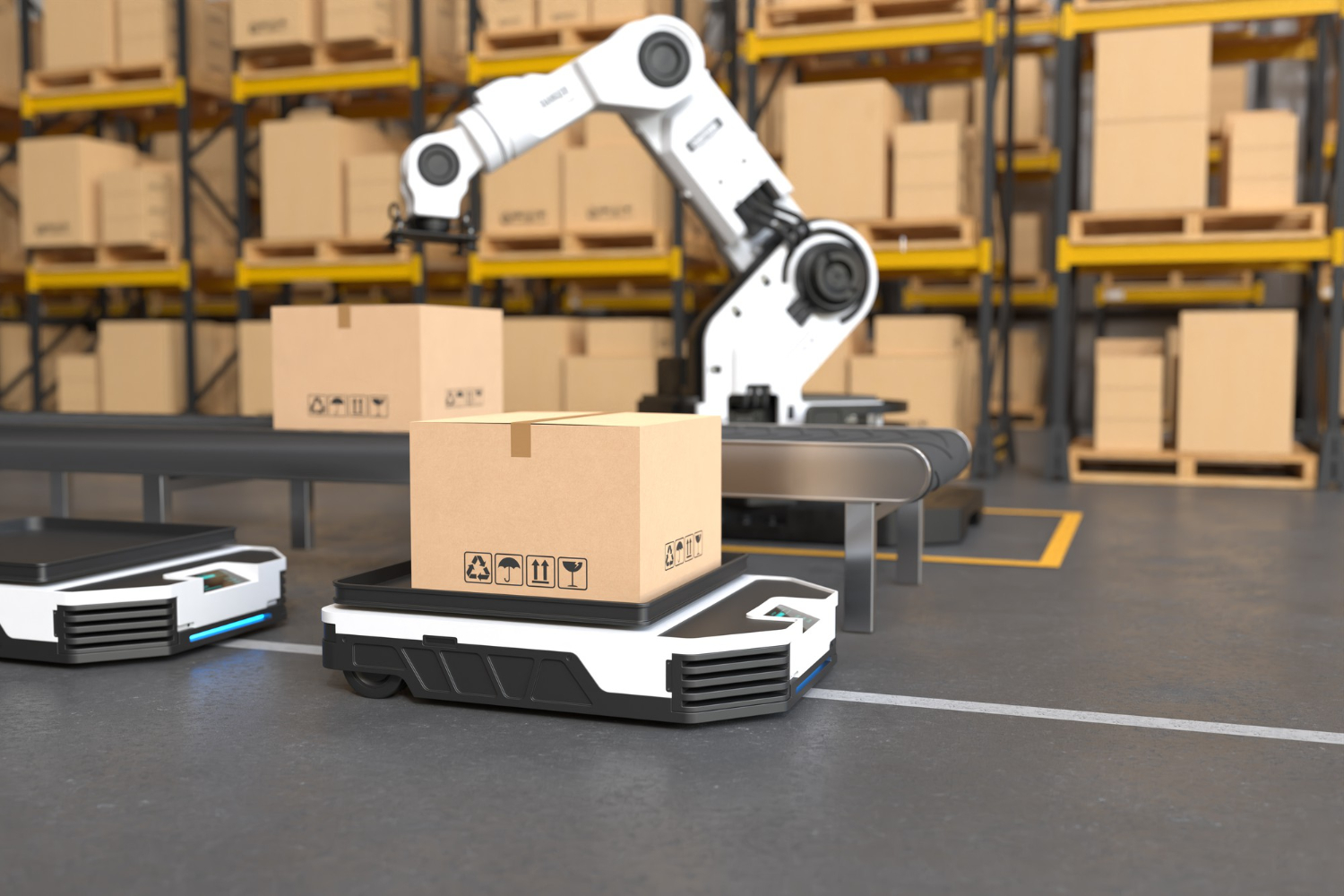
We're not just talking about giant, scary robot arms. The real revolution is in Autonomous Mobile Robots (AMRs). These are small, smart-navigation robots (think a very advanced Roomba that carries shelves).
-
Goods-to-Person (G2P): This is the magic. Instead of your employee walking 15 km a day to find items, an AMR brings the entire shelf to their packing station. They stand in one place, pick the item, and the robot takes the shelf back.
-
Automated Sorting: When Flipkart first automated its Bengaluru hub, it deployed robots to sort packages by pincode. The result? Productivity jumped by 3x, and they could sort 4,500 packages an hour—10 times more than the manual process.
-
Homegrown Heroes: The best part? You don't need to look to Japan or Germany. Indian companies like Addverb Technologies, GreyOrange, and UnboxRobotics are global leaders in warehouse automation, building solutions for India.
The result: Order fulfilment speed becomes insanely fast. Accuracy is near-perfect (robots don't get tired and grab the wrong item), and your human team is freed up for more complex tasks.
The 100-Crore Question: What Happens to Our People?
This is the number one question we get at Express HR Solutions. It's the elephant in the room. "I run a logistics business, not a tech company. If I bring in all this warehouse automation, what do I do with my 200-person staff?"
Let's be honest: some jobs will disappear. The job of "walking 15 km to pick a single item" is going to go away. And it should. It's inefficient and physically exhausting.
But automation doesn't mean mass unemployment. It means mass transformation.
This isn't just a tech challenge; it's a human resources challenge. And it’s a massive opportunity.
The New Job Market: From "Picker" to "Robot Wrangler"
For every manual-picking job that's automated, a new, higher-value job is created. The warehouse of tomorrow doesn't need 100 pickers; it needs:
-
Robot Maintenance Technicians: Someone has to keep the AMRs charged and running.
-
AI System Supervisors: A human who monitors the AI "brain" and handles the exceptions it can't solve.
-
Data Analysts: People who can read the data the warehouse generates and find new ways to be even more efficient.
-
Human-Robot Collaboration Managers: A team lead who manages a blended team of people and robots.
When Flipkart deployed its robots, it didn't just fire its staff. It launched re-skilling programmes to train them for these new roles. This is the future.
The Urgent Need for Reskilling (And Why HR is Key)
Your best "robot technician" of tomorrow might be your best "forklift driver" of today. They already understand your warehouse floor better than anyone. They just need new skills.
This is where your HR strategy becomes your biggest competitive advantage.
-
You can't just post a job for a "robot wrangler." You have to build them.
-
This means investing in training, new certification programmes, and a culture of continuous learning.
-
It also means using smart HR solutions to identify which employees have the aptitude to be reskilled.
Even for SMEs starting small, the "human tech" is key. Modular automation like voice-picking systems (where staff get instructions via a headset) are booming. And to work in a diverse country like India, these systems even need to understand regional languages and accents!
Don't Just Build a Smart Warehouse. Build a Smart Workforce.
You can buy all the robotics in warehouses you want. You can install the most advanced AI warehouse management software on the planet. But on day one, if your team doesn't know how to use it, trust it, and work with it... it's just millions of rupees of very expensive, very stationary metal.
The transition to a smart warehouse is 10% a technology problem and 90% a people problem.
It’s a change in process. A change in culture. And a change in skills.
This is the new frontier of Human Resources. It’s not just about payroll and hiring anymore. It’s about being the strategic partner that builds the workforce of the future.
Are you ready to make the leap? Building a data-driven supply chain is a tech challenge, but implementing it is a people challenge.
If you're focused on the "how" of robotics and AI, let Express HR Solutions help you with the "who." We specialise in finding, training, and developing the talent you need to run the warehouse of tomorrow, today.
Let's talk about building your future-ready team.